


Saffron is derived from “Crocus Sativus,” an autumn flowering bulb produced by the “saffron crocus” with long red filaments within each flower bud. They are the source of the saffron culinary spices that we use use for cooking, medicinal and herbal use and traditional home cures. As the harvest of saffron from saffron crocuses is a labor-severe process, saffron is expensive on the market. In this article we will learn how to grow saffron step by step. This is one of the reasons why high-quality persian saffron is considered valuable worldwide due to its careful harvesting process and premium quality.
What Is Saffron and Why Grow It?
By knowing how do I grow saffron, you can save money and enjoy fresh organic saffron independently of commercially purchased sources. Many gardeners appreciate saffron production as it generally does not take much space to grow and can flourish in a container garden.
Best Climate and Conditions for Growing Saffron
Choosing the best climate is the first step when you ask how do you grow saffron? The plant grows best in places with warm summers and mild winters. However, it can grow in many climates if the soil drains well.
Important conditions include:
- Plenty of sunlight (at least 6 hours a day)
- Well‑drained soil
- Moderate watering
- Cool weather during flowering season
If you are wondering how can I grow saffron in a small space, containers or raised beds are a great option.
Choosing the Right Saffron Bulbs
Saffron grow from a bulb called a corm; this is the first step in successfully learning how can I grow saffron. When you purchase saffron corms:
- Choose large and firm corms
- Do not buy soft or moldy
- Buy from reputable sources or nurseries
Large corms produce more flowers and therefore more saffron threads. These high-quality corms are often used to produce premium types such as Pushal Saffron, which includes both the stigma and a small portion of the style.
Preparing Soil for Saffron
Good soil is essential when asking how do I grow saffron properly. Saffron plants do not grow well in wet or heavy soils. To choose the best type of soil it should contain:
- Garden soil
- Sand or Perlite for drainage
- Compost or other organic material
The soil should be loose and airy with good moisture drainage to avoid rotting the corm.
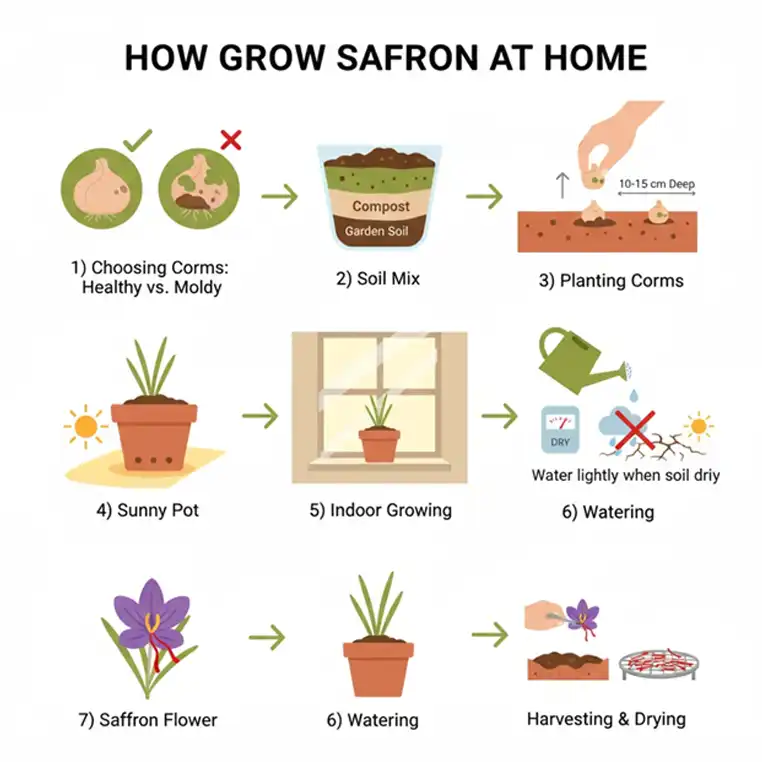
Planting Saffron Corms
Planting saffron is simple and does not need special tools. Follow these steps:
- Choose a sunny spot or container.
- Dig holes about 10–15 cm deep.
- Place the corms with the pointed side up.
- Keep about 10 cm space between each bulb.
- Cover with soil and water lightly.
If you are learning how can we grow saffron at home, pots or wooden boxes work very well. Just make sure the container has drainage holes.
How to Grow Saffron Indoors
Because of cold weather conditions or livin in apartment, many people have questions about how to grow saffron indoors. If you provide enough light sources, saffron will flourish both inside and outside. Here are some helpful hints when planting saffron inside your home:
- Pot your bulbs close to a south, facing window for maximum sunlight.
- Use soil that drains well.
- Don’t saturate the soil with water.
- Keep the temperature of your home at room temperature.
Around the end of Autumn, you should expect to see your first blooms ( violet flowers that create the popular red saffron threads).
Watering and Care
One common mistake that beginners make is watering too much. Saffron plants prefer dry conditions. Here are some general watering tips:
- Water lightly after planting
- Allow soil to dry between watering
- Reduce watering during dormant months
You do not need fertilizer if the soil contains compost. However, a small amount of organic fertilizer once a year can help improve growth.
Harvesting Saffron
How do you grow saffron and harvest it? The most exciting part of growing saffron is harvesting. Flowers usually bloom in autumn and last only a short time. Each flower contains three red stigmas, which are the saffron threads.
Here are some of the harvesting steps:
- Pick flowers early in the morning.
- Gently open the flower.
- Remove the three red threads.
- Let the threads dry in a warm place.
When they are dried, store saffron in an airtight container for months. Careful harvesting and drying methods are essential to produce high-grade products like Sargol Saffron, which contains only the pure red stigmas.
Common Problems When Growing Saffron
Now we know how do I grow saffron. Even though saffron is easy to grow, you may face a few problems:
Overwatering
Too much moisture can rot the bulbs. Always use well‑drained soil.
Lack of sunlight
Without enough light, plants may produce fewer flowers. So, put the container in a good place.
Poor quality bulbs
Small or damaged bulbs often produce weak plants.
If you follow the basic steps in this guide, you will not face serious problems.
Why Growing Saffron at Home Is Worth It
People often ask “how can I grow saffron and is it worth the effort?” The answer is yes for several reasons.
- Saffron plants need little space.
- They do not need daily care.
- The flowers are beautiful.
- You can produce a valuable spice at home.
Many home gardeners start with just a few bulbs and later expand their saffron garden.
Different Types of Saffron in Toucan Trade Group
As global demand for saffron continues to grow, many agricultural companies are working to connect farmers and markets. Companies such as Toucan Trade Group focus on delivering different kinds of quality saffron such as Super Negin Saffron, Negin and, etc. Visit our website, choose the best type and place your order.
FAQs
- How long does saffron take to grow?
Saffron corms usually produce flowers about 6–10 weeks after planting. You can see most flowering in autumn.
- How much saffron can one plant produce?
Each flower produces only three saffron threads.
- Can saffron grow in pots?
Yes. Many people who learn how to grow saffron indoors use pots or containers. If the pot has good drainage and sunlight, saffron can grow very well.
