


Raisin making process refers to changing fresh grapes into a sweet snack in a carefully performed process, including harvesting, pre-treatment, drying, and preservation. This is making use of the old methods, which have been modified with the technological upheavals to guarantee quality and safe products to the global market. In this article, we will investigate all the details about raisin production process and how iran raisins have become a benchmark in global markets for taste and quality. As part of Iran’s agricultural exports, products like pistachios and dates are also significant, with dates price in iran often influencing trade trends alongside raisins.
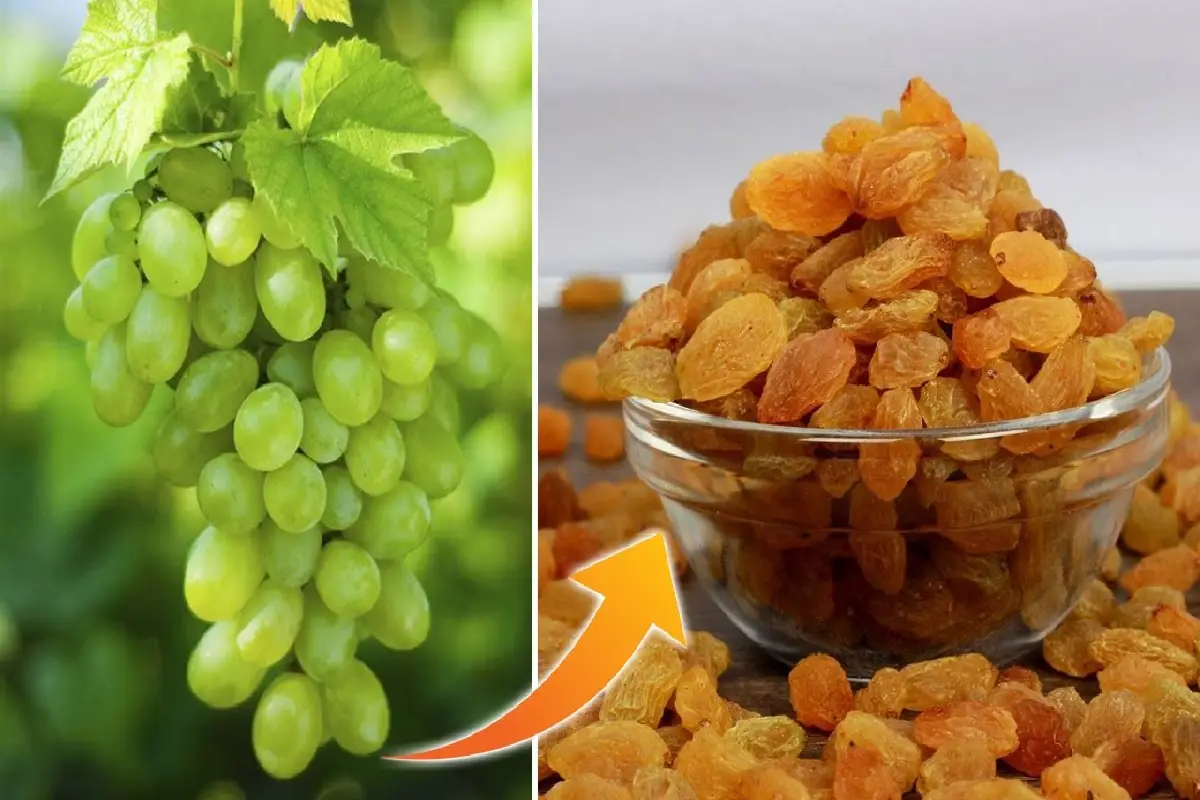
Raisin Making Process: Step by Step
How raisins are made from grapes? Here are its steps
1) Grape Selection and Harvesting
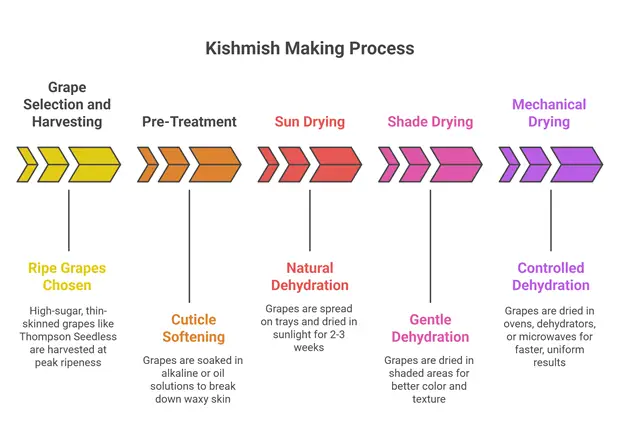
To know how is kishmish (raisins) made, remember that a good raisin begins with the choice of grape varieties with a high sugar content and thin skin, like Thompson Seedless or Sultana grapes. Grapes are harvested when they are fully ripened to get the maximum amount of sweetness and produce. Thompson Seedless, Fiesta, Selma Pete and DOVine are some varieties that are preferred in golden raisins.
2) Pre-Treatment: Preparing Grapes for Drying
Pre-treatment enhances the performance of the drying process because it promotes the underwater flow to reach the surface of the grape. how are raisins made starts by soaking and dipping in a liquor of potassium carbonate and ethyl esters of fatty acids to cut the waxy cuticle of the skin. The new methods involve oil emulsions, alkaline dips, or extra virgin olive oil, which hasten the dehydration process and improve the end product.
3) Drying: Sun, Shade, and Mechanical Methods
It is the drying process and raisins preservation method that defines the process of grapes becoming raisins:
- Sun Drying: How to make raisins in the sun? The grapes are arranged on clean trays and exposed to sunlight for a period of 2 and 3 weeks until the moisture content reduces to approximately 15%. Sun drying is natural and economical, but it can be contaminated and spoiled.
- Shade Drying: Shade drying for raisin production is applied in areas that are cooler in temperature, and color and texture are more important than speed.
- Mechanical Drying: This method in kismis making process includes oven drying, dehydration, and drying by using the microwave in controlled, quicker drying. The drying is done by mechanical means to reduce microbial contamination and to produce similar raisins.
Preservation and Drying Processes
After knowing how kismis is made we should know about raisins preservation method:
- Cleaning: Raisins are washed to remove dust, stem, and foreign materials.
- Sorting: The raisins go through mesh screens and are sorted by size, with the seeds and off-grade fruit being removed mechanically.
Preservation Methods
Shelf-stable raisins should be well-preserved. Sulfur dioxide is also applied in order to keep the color, lessen the browning, and prevent the loss of vitamins, particularly in golden raisins.
Raisins will be stored under airtight conditions, in the absence of heat and moisture, to inhibit the growth of microbes and the formation of mycotoxins. Quality and safety are guaranteed at each stage through the analysis in the laboratory.
How Are Golden Raisins Made?
How kismis is made, especially the golden ones? The same grapes used to make normal raisins are used to give golden raisins. Key differences are that grapes are dipped in sulphur dioxide before the drying process to maintain the golden color. They are dried in dehydrators and controlled drying tunnels in which the grapes are dried at 145-155°F for 18-20 hours.
Raisins Preservation Technique
After learning about kishmish (raisins) making process, keep these preservation tips in mind:
- Keep raisins in a cool, dry place or refrigerate to increase the shelf life of raisins.
- Use sealed containers to avoid moisture and pest contamination.
- Sulfuring and laboratory testing stop spoilage, and they are safe for eating.

Some Raisin-Producing Secrets
How kishmish (raisins) is made in the best way? Consider:
- Use undamaged ripe grapes to achieve maximum results.
- Apply pre-treatment dips to accelerate the drying process and improve quality.
- Always turn the grapes and ensure they are well air-dried under the sun.
- Check on contamination, take off stems, and keep appropriately to maintain freshness.
Toucan Trade Group’s Global Impact on the Raisin Market
Toucan Trade Group is an Iranian trader specializing in the export of agricultural products, including high-quality persian pistachio, raisns, dates and saffron to countries around the world. Known for exporting Iran’s best dried fruits and nuts, the Toucan Trade Group serves the world’s B2B customers with quality, dependability, and trusted supply chains. Contact us now to place your order.
FAQs
- What is the best kishmish (raisins) making process?
Sun drying is easy and effective. Simply wash and dry grapes and place them in a single layer in a tray, where they will receive plenty of direct sunlight. Sun drying may take 2–4 weeks.
- How are golden raisins different from regular raisins?
Golden grapes come from the same grape varieties as regular grapes, but are treated with sulfur dioxide and dehydrated or cooked in an oven. This process preserves their light color and delicate texture.
- What is the best raisins preservation method?
Use an airtight container to store the grapes, then keep the container in a cool, dry place, and avoid refrigeration. Moister and warmer environments, such as a refrigerator, promote spoilage, and increase the risk of mold.
