

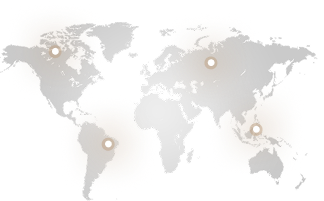
Pistachio nuts are a favorite worldwide dish that has a good reputation thanks to their distinct taste and nutritional content, as well as their ability to be cooked in both sweet and savory dishes. But not everybody knows the answer to where do pistachios grow and under what conditions these hardy trees should be planted. In this article, you will get to know everything about the best areas to plant the pistachio trees, the largest producing areas in the world, and why areas such as Iran and California are the best places to plant these healthy nuts. Where do pistachio trees grow? Let’s read.
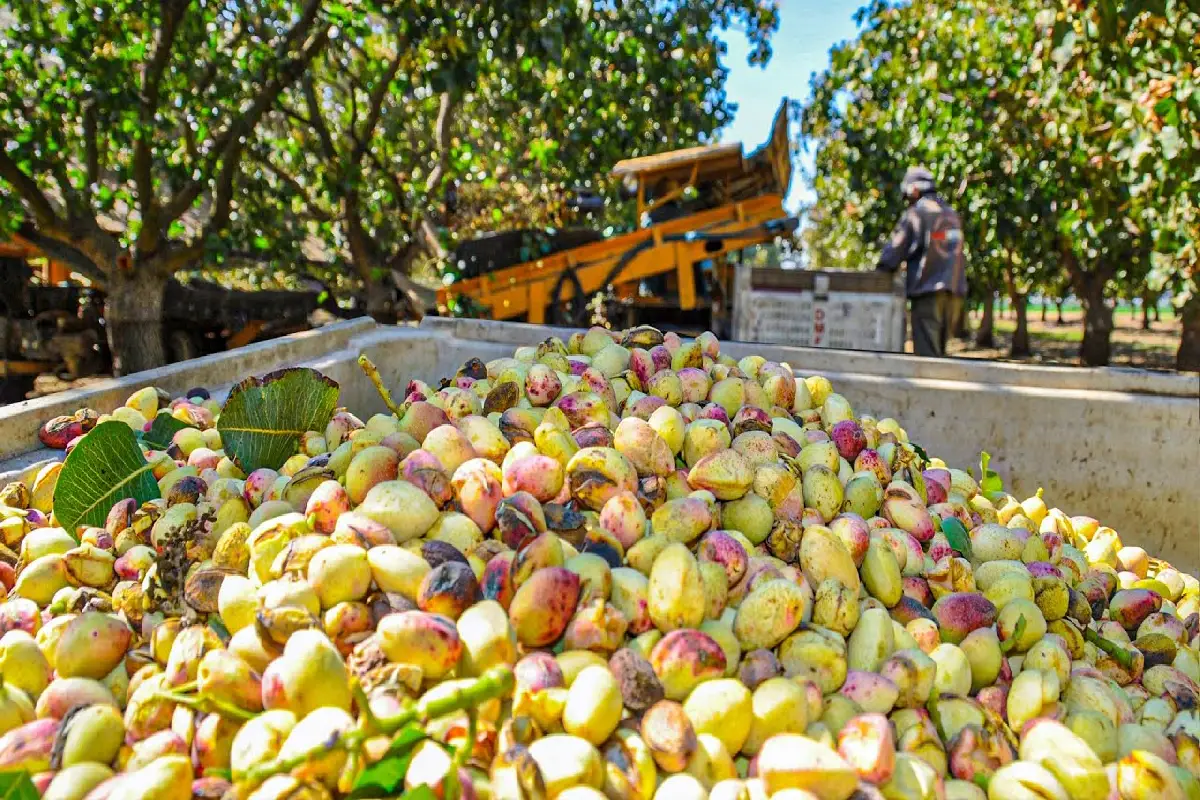
Where Do Pistachios Grow?
Where do they grow pistachios? The growth of pistachios is mostly seen in hot and dry summer and mild, cold winter areas. Pistachios are native to the Middle East and Central Asia, and they have been adapted to withstand severe climatic conditions, which will make them resilient and drought-tolerant when compared to most other trees that produce nuts. Pistachios are also now cultivated in other continents commercially, even though some countries still dominate the world production.
Major Pistachio-Producing Countries
Where do pistachio nuts grow the most? According to the latest agricultural data, the world’s largest pistachio producers are:
| Country | Estimated Annual Production (tons) |
| United States | 400,000 – 524,000 |
| Iran | 135,000 – 241,669 |
| Turkey | 119,000 – 239,000 |
| China | 78,000 – 82,000 |
| Syria | 43,000 – 45,467 |
| Greece | ~11,800 |
| Spain | ~7,500 |
| Madagascar | ~6,400 |
| Tunisia | ~3,100 |
| Afghanistan | ~2,800 |
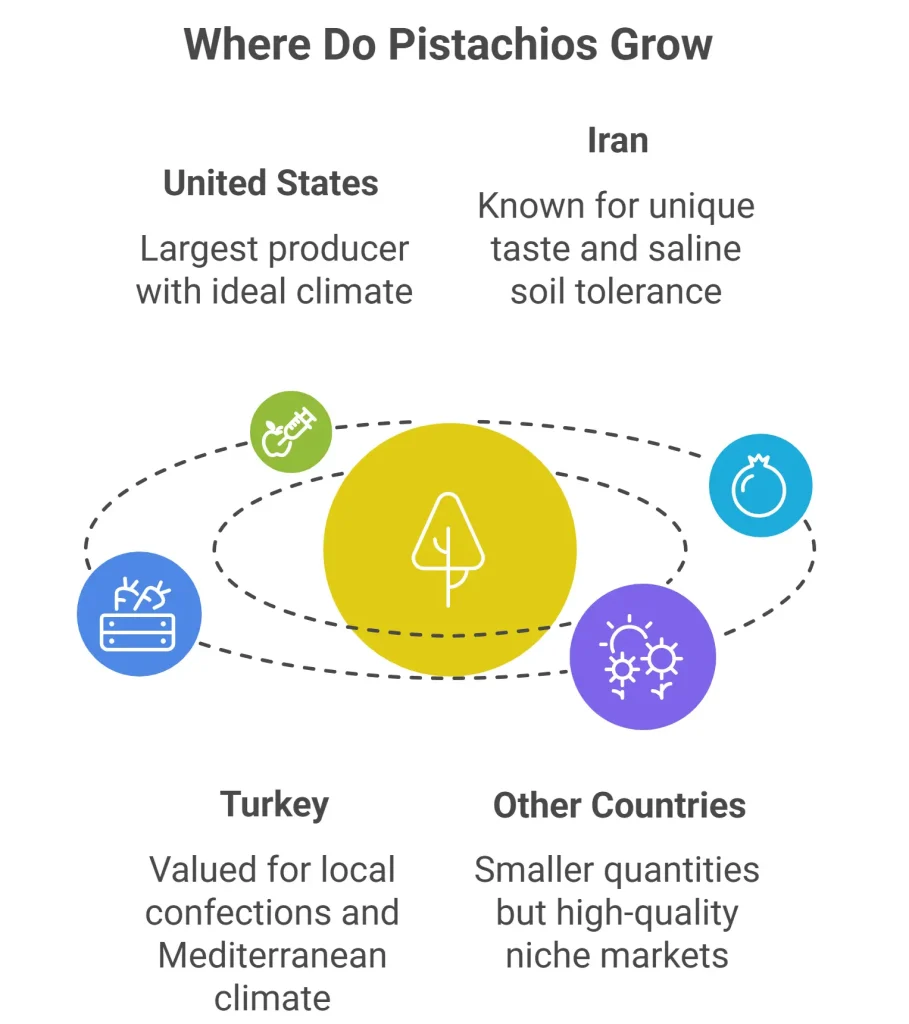
Where do pistachios grow around the world? Here are the details:
1. United States
The U.S is the largest producer of pistachios in the world, with almost all the commercial pistachios produced in California (mainly the southern San Joaquin Valley), and the regions of Arizona and New Mexico. The climate in California offers an adequate combination of hot summers, cool winters, low humidity, and dry soils.
2. Iran
Iran is a very famous and ancient country that produces pistachios, and the exports are characterized by a unique taste and size. The center of the Iranian pistachio production is Kerman province, which covers more than half of the Iranian area of production. The persian pistachio can grow in saline soils, desert climatic conditions, able to endure extreme temperatures in hot and cold environments.
3. Turkey
Pistachios have been cultivated in Turkey and the province of Gaziantep in particular for a long period of time. One of the highly prized items is Turkish pistachios, and it is another important component of local confections. P. vera trees thrive very well in the Mediterranean climate.
4. Other Countries
Where do pistachios grow on other areas? China, Syria, Greece, Spain, Italy, Madagascar, and Tunisia are other important manufacturers. These countries offer smaller quantities but frequently produce in the high-quality or niche markets, which helps in supporting the local consumption and export diversity.
Where Do Pistachio Trees Grow Best?
To know where do pista grow, we should mention that pistachio trees will thrive in a climate that has long, hot summers (usually over 38 °C) and sufficiently cold winters so that they can be in their dormant state. The trees do not need much rainfall; they grow in well-drained sandy-loamy soils that have a pH range between 7 and 8. Too much humidity may damage the pistachio trees, leading to the development of diseases and root rot, and it is preferable to use dry air. Even though pistachio trees are drought-resistant, they need deep infrequent irrigations in commercial orchards.
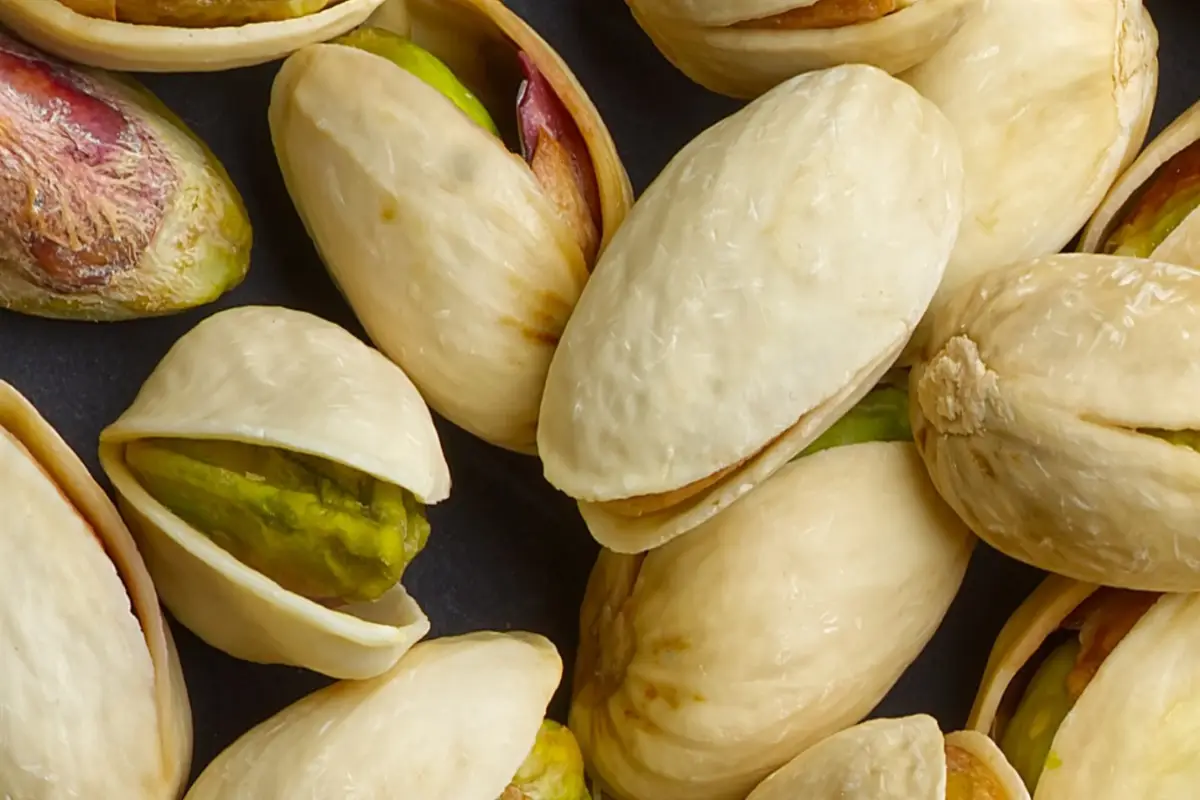
The Best Places That Pistachios Grow Naturally
Where do pistachios grow naturally? The wild pistachio trees grow in some regions of Iran, Afghanistan, and the steppes of the Central Asia and have developed to survive under harsh temperature differences and low precipitation. Where do pistachios grow from in modern types? The modern types are closely genetically related to these wild species, though you can find commercial types raised selectively to produce more yield and better quality nutrients.
What Regions Have the Right Conditions for Pistachios?
To understand where do pistachio trees grow best, the following are the conditions under which these trees should grow:
- Dry, hot summers: Summer temperatures of 38 °C or higher are required to develop nuts.
- Cold winters: Dormant and correct bud development require near-freezing temperatures.
- Dry climate: Wet climate fosters illness and lowers the quality of nutrients in pistachios.
- Properly drained soil: Best soils are sandy loam or deep clay soils of neutral to slightly alkaline PH.
- Full sun: The pistachio trees should not have less than six hours a day of sunshine.
- Low rainfall: The ideal amount of water is 20 inches (500mm), and most of the water is applied through irrigation in the contemporary orchards.
Toucan Trade Group: Leading Iranian Pistachio Exporter
We answered the question of where do pistachios grow. To buy the best pistachios, Toucan Trade Group (TTG) is one of the largest exporters of pistachios, dried fruits, and dates in Iran. TTG focuses on high-quality Iranian pistachios like Ahmad Aghaei Pistachios and Fandoghi Pistachios and has been known to follow quality, reliable supply, and the capability to fulfill the demanding import and distribution demands throughout the world. Contact us today to place your order.
FAQs
- Where do pistachio trees grow on the tree?
Pistachio nuts are produced in clusters on the Pistacia vera tree branches. The nuts grow in a fruit (drupe), which cracks and dries up when the fruit is ripe, and naturally opens to the well-known pistachio shell.
- Where do pistachios grow in the world today?
The most common places where pistachios can be found are the U.S., Iran, and Turkey, with California being the leading state in the U.S. Others are China, Syria, the Mediterranean, Greece and Spain.
- Where do pistachios grow best: In orchards or naturally?
Although there are wild pistachio trees, the commercial quality pistachios are found in well-managed orchards with the best climate, soil, and water.
