


Pistachios are known to have a bright green kernel and a nutty taste, but most people have always questioned whether that color is natural or if it is the product of added color. High-quality varieties such as persian pistachio are especially famous for their naturally vibrant green kernels due to favorable climate and traditional cultivation methods. Here in this article, you will find out why are pistachios green, what makes them green, and other details. Stay with us.
What Makes Pistachios Green?
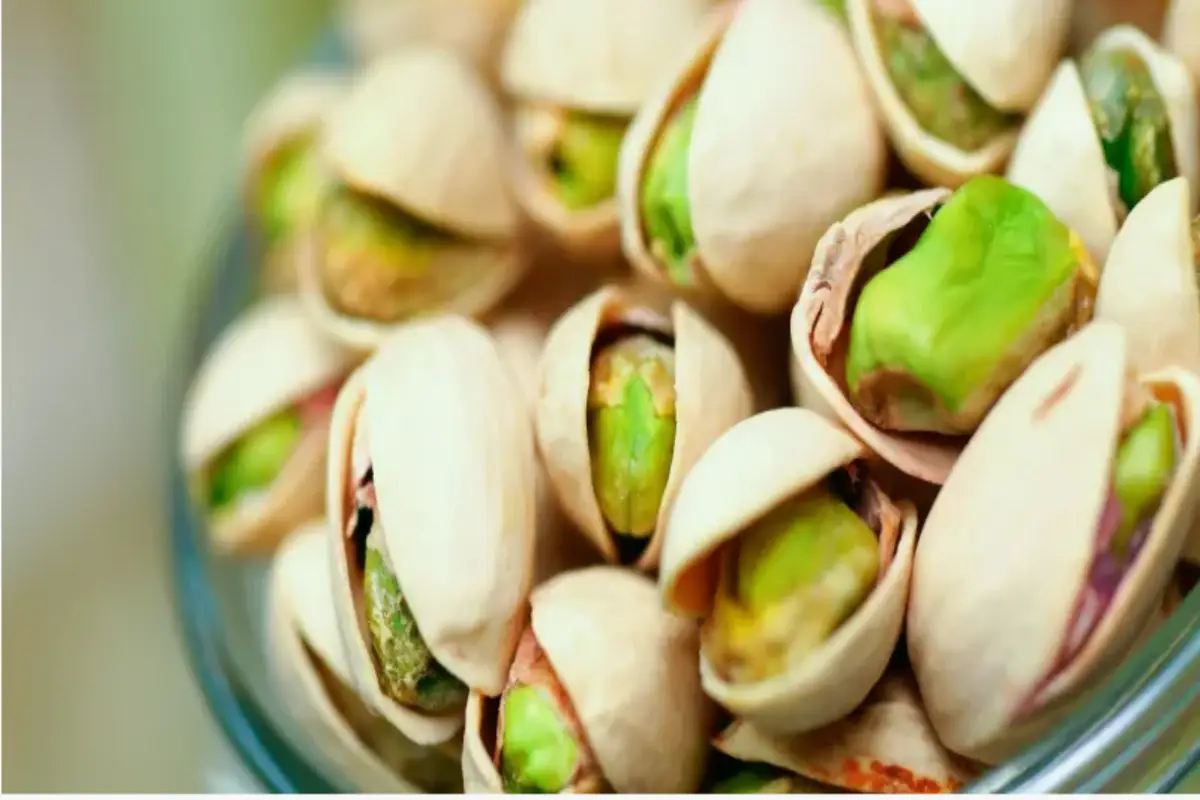
If you ask why is pistachio green, you should know that natural plant pigments that are found within the kernel give them their green color. Chlorophyll is the most significant pigment and the one that renders the appearance of leafy vegetable foods, such as spinach and herbs, green. Pistachios are also good sources of Carotenoids, lutein, and zeaxanthin, which provide yellow and yellow-green color to the body and are antioxidants.
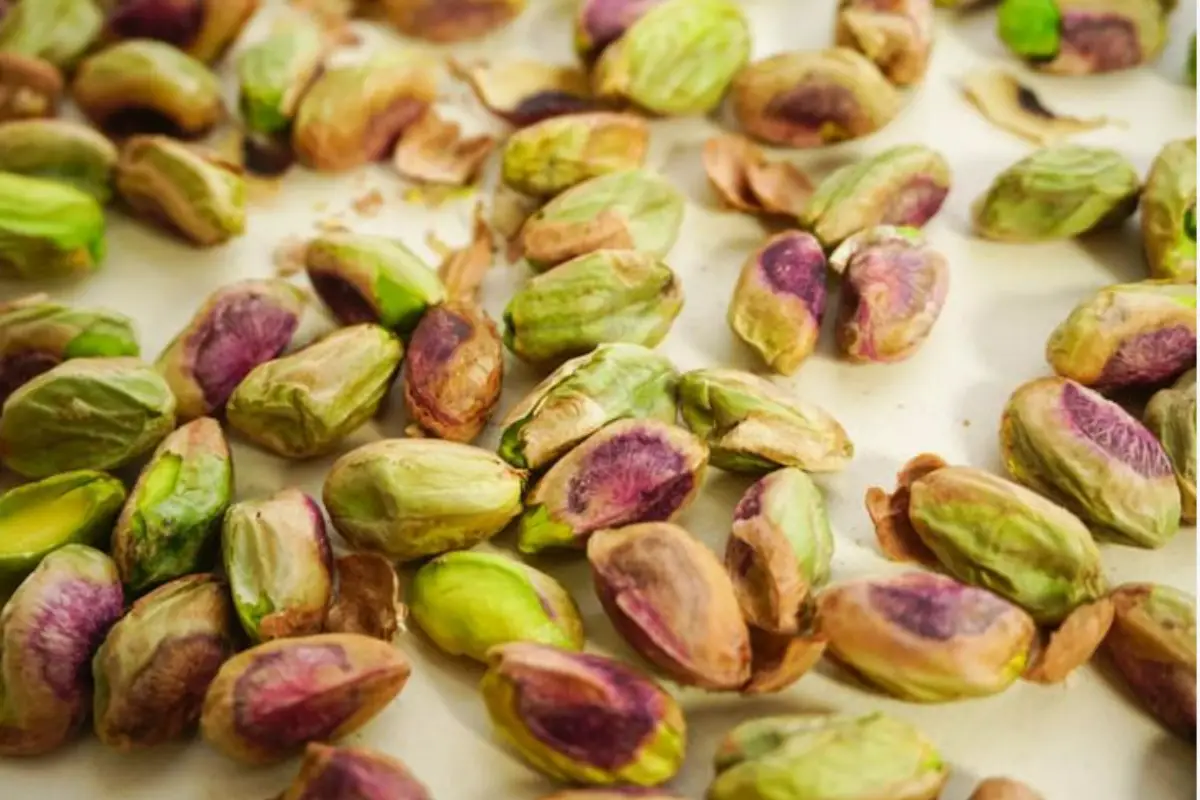
By looking closely, you will also notice that there is a light purple or reddish layer around some kernels. This is provided by Anthocyanins, another group of natural pigments that make fruits and nuts red, purple, and blue. The combination of these pigments makes pistachios look green or green purple, which consumers and chefs prefer.
Factors Influencing Pistachio Color
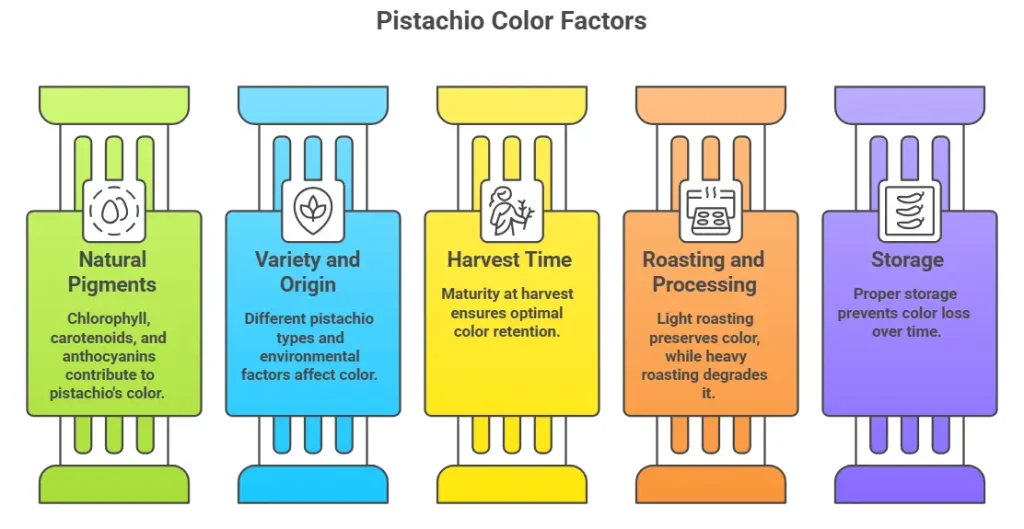
Why are pistachios dyed green? Some factors influence the appearance of a pistachio as green:
• Variety and origin
Different pistachio types have different amounts of pigments, and some are dark green while others are yellowish green. Popular cultivars such as Kalleh Ghouchi Pistachios are known for their large size and attractive kernel color, which can influence grading and market value. Each year, it is anticipated that the chlorophyll and carotenoid development in the nut will be affected by sunlight, temperature, and soil quality.
• Harvest Time
Nuts that are harvested at the correct level of maturity retain a more natural color compared to those that are harvested too soon or too late.
• Roasting and Processing
Light roasting can preserve the green color, whereas heavy roasting or high heat may destroy chlorophyll, turning the kernel olive or brown.
• Storage
The green color may be gradually lost by long storage, high temperatures, and exposure to light or oxygen.
In the case of the food industry, the green kernels are generally graded at higher grades and are used in pistachio pastes, ice cream, chocolate, and in luxury desserts.
Why Are Pistachios Green or Red?
The majority of pistachios at the market today are sold in natural color, although the older generations can recall red or bright green pistachios. Previously, some companies dyed pistachio shells to make them appear red or green to hide the stains, insect marks, or irregular drying on the shell surface, and also to make the product visible on the shelves in the stores.
learn more: how to shell pistachios quickly
To know the reason why are pistachios green, it is necessary to know that it is practically the shell that was dyed, but never the kernel itself. The pistachio is naturally green or something resembling yellow-green, as undyed nuts are. With the promotion of more natural and clean-label products, the demand for dyed shells cut down, and naturally green kernels and beige shells are the new trend in most markets.
How to Choose Natural Green Pistachios?
After understanding why are pistachios green, we should know the differences between natural and artificial green pistachios. If you prefer to select pistachios depending on their natural color, there are a few basic tests:
- Peer in the shell: Shells of natural pistachios are beige or cream. Added dyes are shown in very bright red or neon green shells.
- Verify the kernel: Natural kernels have a soft green to yellow green range with a color variant, no flattened artificial-looking color.
- Read the label: Check the color additives in packaged snacks and products with the taste of pistachio. Color is not just out of pistachios with names such as artificial color or code numbers.
- Check the Type: Strongly green ice cream, frosting, or candies are nearly always underpinned with added color, due to the fact that natural pistachio is hardly capable of achieving such a vivid hue on its own.
Laboratory tests and official quality reports can be used with professional buyers to ensure that the product lacks synthetic dyes and is of a particular standard in the market.
Is the Green Color Sign of Healthier Pistachios?
Now we know why are pistachios green, but are they healthier? Green pistachios are not only beautiful, but the green and yellow pigments are also healthy. Varieties such as Fandoghi Pistachios are often appreciated for their balanced size and naturally pleasant green shade. Chlorophyll, carotenoids, and polyphenols are antioxidants that prevent cellular oxidative damage and oxidative stress. Research on pistachios demonstrates that it contains beneficial compounds in addition to protein, healthy fats, fiber, vitamins, and minerals, including potassium and vitamin B6.
But remember that even color by itself is not a sign of health. Very green pistachios can be a sign of proper pigment content and gentle treatment, but even slightly paler nuts may be a source of similar basic nutrients if they are fresh and available in proper storage. When selecting pistachios as a healthy option, consider quality, freshness, moderate levels of salt, and also the look.
Naturally Green Pistachios in Toucan Trade Group
For food manufacturers, wholesalers, and importers who need reliable, naturally green pistachio kernels, working with a specialized exporter is essential. Toucan Trade Group (TTG) supplies pistachio kernels and nuts from leading pistachio regions, especially Iran, where climate and traditional farming support strong natural color and rich taste. Our portfolio includes well-known varieties such as Ahmad Aghaei Pistachios and Akbari Pistachios, selected by color intensity, size, and cleanliness, so buyers can choose extra-green kernels for premium desserts and chocolates or standard grades for everyday snacks and bakery use. Contact us now to place your order.
FAQ
- Why are pistachios green inside, but the shell is beige?
The shell is naturally beige, while the kernel contains chlorophyll, carotenoids, and sometimes anthocyanins that create a green to green‑purple color. - Why were pistachio shells sometimes red or bright green in old packs?
Some producers dyed shells to hide stains and make them more eye-catching, but the kernel inside usually stayed naturally colored. - Where can I buy naturally green pistachio kernels?
Visit our website and contact us at Toucan Trade Group to buy natural and high-quality pistachios and their kernels.
